Podcast | Building Connections in the Operating Theatre- with Hats!
In our first-ever video episode, host Chris Backous chats with Liz Fitzhugh and Danielle Checketts about how reusable surgical hats are saving the environment and building relationships in the operating theatre and beyond.
Featured in this episode:


Episode Transcript
Better Never Stops | Building Connections in the Operating Theatre- with Hats!
Chris Backous: Thanks for joining us for Better Never Stops, our podcast for healthcare leaders and everyone committed to transforming healthcare. We interview leaders from our clients and partners around the world as well as leaders right here in Seattle who work to maintain a culture of continuous improvement at Virginia Mason Franciscan Health.
In each episode, we hope to explore a philosophy of go see, ask why, and show respect. My name is Chris Backous and I’m the executive partner for Transformation Services at the Virginia Mason Institute. I’ll be your host for this episode of Better Never Stops.
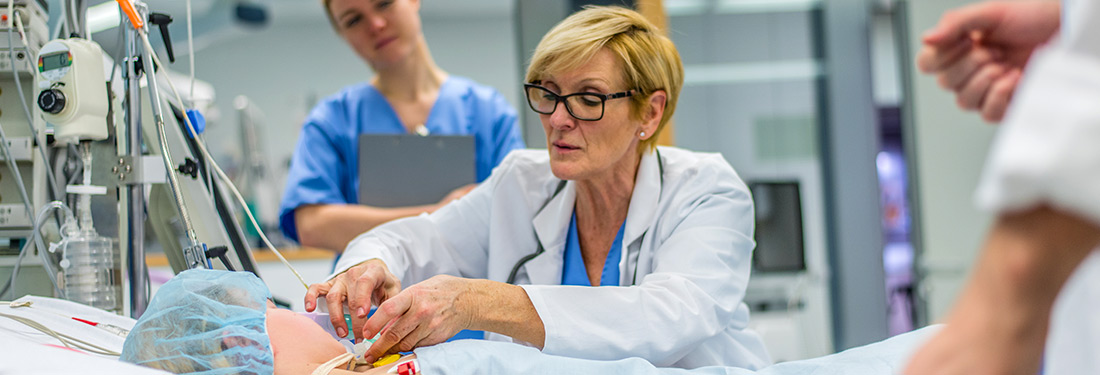
Today we’re talking about…hats! Believe it or not, a new approach to surgical hats that people wear in operating rooms in the US or operating theatres in the UK is saving money, protecting the environment, and most importantly, it’s supporting communication and the relationship building between patients and within medical teams.
These badge hats are so exciting that we decided that this podcast episode should be a video so that we can see this idea in action. If you’re just listening to this, check out our website or find us on Spotify for the full video episode.
My guests today are Danielle Checketts, who is the founder of Eco Ninjas and creator of the hats we’ll be talking about today, and Liz Fitzhugh, who is the Net Zero Lead at University Hospitals Coventry and Warwickshire NHS Trust, otherwise known as UHCW. Thanks so much for being on the podcast with us today, Liz and Danielle.
Danielle Checketts: Thank you for inviting us, Chris.
Liz Fitzhugh: Yes, thank you. It’s exciting.
Danielle Checketts: Yes.
Chris Backous: Yeah. I’m so glad you’re here. So, Danielle, let’s go ahead and start with you. Can you tell us a little bit about these surgical badge hats, where the idea came from, and what problems were you trying to solve with them?
Danielle Checketts: Yes, of course. In various capacities, I’ve worked and been in operating theatres for over 20 years now, and each time I’ve been in there, I’ve always not known who’s who. And always been mistaken myself as to being somebody else other than who I was. So, when I was in hospital, UHCW, in 2020, Liz Fitzhugh kindly asked me to write my name and role on my disposable theatre hat, and because of all the miscommunication that I’ve experienced personally in various capacities, it had a profound impact on me. And so I thought: what a fantastic way to improve communication, patient safety, and also sustainability, because Liz and her team were looking to change from disposable theatre hats to reusable embroidered theatre hats, which was a fantastic initiative and idea.
So I went away and for several months, did a lot of research.
Chris Backous: I know you have a sample of the hat with you. Can you show us how it works?
Danielle Checketts: Yes, of course. So, this one is called the Elastic Back. We just have elastic at the back and ladies and men can just put their hair up inside the hat. So we have elastic just at the back of the hat and the rest of it is kind of straight poly cotton fabric.
Very comfortable to be able to wear your hair up. And we have a few other designs, one of them being the hat for hair braids. We have a different color badge on here to denote team leader, which is red, and we have just simply a pouch at the back of the hat with a tie that can tie to make the hair braids feel more secure.
And so the pouch can just collectively hold the hair braids towards gravity and not needing to put them up tightly on their head. When you wear tight, it can pull on the follicles if it’s tightly on the head, and it can cause headaches and traction alopecia. So holding the hair braids gently, securely is the feedback we’ve had from our end users, which is why we’ve designed the hat. And then this one is our hijab. So we’ve got a lot more fabric going down to cover, the chest area, and the back with an opening for the face. And then the badge just goes above there.
So this is the hijab and there’s a lot more material covering this. So we have press studs or poppers. There’s different names for them, and the female press studs are on the hat. And then we have the male stud, which connects with it here. Can you see that? The badges are durable, very lightweight, so you can’t feel them and you simply just attach each side of the badge to the hat, and then you wear this during theatre. So when you wear this, and obviously you tuck your hair in. Everybody knows who’s who. So just at a glance above the eyes when eye contact is given, everybody can be easily identified from students to surgeons at the end of the shift.
Or if the hat gets contaminated, you can just remove the hat. The badge is detached. The badge is washed with either soap and water or detergent wipe, and then the hat can either be taken home to wash or washed alongside the scrubs. Whatever the policy is of the Trust, it’s very flexible.
Chris Backous: It’s just such an amazing and simple idea that does so much for so many people.
So, you know, of course there’s the real benefit of not throwing away things after each use, that repurposing. But also, can you talk a little bit about why a name in a surgical environment is so important? You’d alluded to the fact that people are gowned up and kind of covered up, but what is it doing, do you think, having those names out there?
Danielle Checketts: Yeah, so it, you know, the brain, when it hears your name, the brain wakes up, you feel part of the team, especially for students. So when I was a student nurse over 20 years ago nobody knew my name and I didn’t know anybody else’s name. And when you’re trying to address somebody you don’t know their name, how do you get hold of them?
You know, hierarchical barriers are another common problem within the operating theatre environment. So if you don’t know the name of the person, how can you address a situation that may occur to, you know, explain that that’s happening in emergencies as well. I’ve been in emergency situations trying to get out of the room when I’ve been a salesperson in there.
And people have been trying to get me to do things and I’m trying to get out of the room saying I can’t get involved, because people don’t know who I am. Seconds are critical in operating theatre environments when surgeries are taking place. Especially if an emergency occurs like an arrest of a patient, you need to know who’s who so you can direct the jobs to those individuals, but also for the names to be used. So you’re speaking to the right individuals and making them feel included and part of a team as teamwork.
Chris Backous: What I like about that is you’re not just someone in the room. You’re a person who has a role and you have a name, and I can just imagine what that does for building teams.
So, Liz, let’s bring you in on this because Danielle said that you were the one that asked her to write her name on a surgical cap. So I’d love to hear more about what you were trying to accomplish that stimulated the idea and that that led to the conversation today.
Liz Fitzhugh: So we’d been doing a lot of work around human factors: courtesy in theatre, Civility Saves Lives, and we’d been made aware of the Australian Theatre Hat Challenge, where an anesthetist wrote his name on his hat.
And like Danielle said, suddenly everybody knew his name. To patients who come through, we all look anonymous. And so to have your name on a hat that a patient can see, they can call you by that name, but if you have your role on as well, they can also see the medical team that’s looking after them.
And it also starts conversations in those vulnerable times when they’re going to sleep. It’s like being at the hairdressers: “going on holiday love?” In the anesthetic room, the default setting is “what would you be doing if you weren’t here today?” Now we can have conversations where the patient initiates where, “oh, you are an operating department practitioner. I’ve never heard of that before. What does that do?”
Making those unseen roles alive for the public. Now as Danielle alluded to earlier, there have been situations where there is an emergency and someone shouts, “go and get me the crash trolley!” No one goes or everyone goes. Now if you have a name on your hat and you hear, “Liz, go and get the crash trolley!” I’ve got a clear direction there of what I need to do. And also in those situations, you become blindsided. You, you don’t see people’s faces, you forget people’s names. So having that reminder on people’s hats, you can say, “Danielle, go and get the crash trolley.”
And people, whether it be menopause or they’ve just had a baby, or, or for whatever reason, you can be somewhat forgetful. I forget my husband’s name sometimes! It’s having that memory in front of you, that reminder in front of you, of who people are and what their names are. So you are not embarrassed and you don’t have to say, “oh no, I’ve known you 30 years, but I can’t remember what your name is.”
Chris Backous: Yeah.
Liz Fitzhugh: So that’s the history behind why we did it. And it just so happens that sustainability, it was a natural fallout from that. Unfortunately, when we started it, nobody was making hats in the UK. There was a big space in the market. There was one poor lady in Birmingham who was making them in her garage.
She was an ODP in Birmingham. And the numbers that we needed, we just couldn’t ask her to do. And they were quite expensive. There were no other companies that were making it at the time. I went to a conference where there were three or four medical uniform companies and nobody would talk to me apart from one company who picked up on what we were trying to do. And so we ordered through them. And we were waiting for our orders to come through, that’s when Danielle came in and I said, “can you write your name on your hat?” ‘Cause while we were waiting for those hats to arrive, we were writing our names on our hats. Unfortunately [the ink] went through and people were going home with their names written on their forehead, which was quite exciting. And sitting on the bus, people were looking very strangely.
That’s why we started it. The other thing was with companies, as Danielle alluded to, you’re in a theatre, we don’t know who you are, the reps that are there and providing support for the surgeons when they’re operating, e didn’t know who was who. And the bigger companies were then able to go out and buy hats so we could see who was a rep and who was just there to support. We went with embroidered hats because they were the only ones available on the market at the time. And I don’t know if you can see that the name and the who I am at the time is embroidered quite securely on.
So if I was to leave or change role this hat would then become useless unless you find someone else called Liz who does Manager of the Day. Which there’s only one me, so there certainly wasn’t anyone else. You end up having to have, as I did, five or six different colored hats because I performed different roles depending on what I was doing.
Chris Backous: So this is about problem solving by identifying the problems without judgment. Then empowering people to have ideas. So there’s that perfect moment where we knew what our problems were, we were searching ideas, and we weren’t just happy with the status quo answer. We were pursuing something that really could work for us.
Liz Fitzhugh: We color code our hats depending on your role. And as the theatre manager I could walk into theatre and see that I had the right number of people and of the right designation and role without spending too long trying to work out who was who when we’re all looking anonymous. So I could see we have a team leader, I could see we have three registered practitioners, and I could see we have our support staff as well as an anesthetist and surgeon because they all wear different colored hats. And that’s very useful. I could go around my 36 theatres and very quickly to make sure that all the staffing levels were there.
Danielle Checketts: Also, another side of it, when I’ve been in theatre and said, oh, what do you do? My name’s Danielle, I’m a rep, and they say, oh, I’m a rep. I’m a rep. I said, there’s lots of reps and there’s assumptions that they’re all part of the team.
So for theatre managers like Liz that look in and they’ve all got disposable hats on thinking, right, we’ve got 12 people in there, we’re good to go. Five of them might be reps. And sometimes, you know, we’ve got systems to say whether you should sign in and things, depending on whether people do that. But sometimes people don’t sign in and when their face gets recognized, they get let through.
And so there’s more kind of reps in there than there should be. So I think in terms of the safety element as well, knowing who’s who clearly can really identify that position.
Chris Backous: Well, and I think that’s an important factor. You know, the concept that we teach people about with the Virginia Mason production system and UHCWI, which is your improvement system is the visual management.
So, Liz, what you talked about, when you can quickly see at a glance if you have all roles represented versus having to remember each person’s face or actually having to ask each person what their role is, it’s that efficiency of at a glance and also knowing that, maybe there are five reps in the room, should we have that many reps in the room? Or do we need to have a conversation that could improve the safety of the surgical case by reducing the number of non-involved people in the room that could create a distraction. So that visual awareness, visual management aspect of ideas like this is also very important.
Danielle Checketts: Yeah.
Liz Fitzhugh: Precisely.
Danielle Checketts: As a student nurse, you get given jobs to do and roles to do and stuff, it’s really daunting. You end up hiding thinking, “oh, don’t ask me,” because you know, even on your first day, can you go and get this and do this?
And you go and you start diminishing your role by saying, “I’m only a student. I’m only a student.” And that when you keep saying that to yourself, you actually feel a bit useless. So when people know you’re a student, they go, “oh, come over. You are here to learn. Would you like to know this? Are there any questions you have?”
So all of these great things can be asked too, and you can be included more when people clearly know who you are and what you do.
Chris Backous: This is also about learning by doing. Right.
Danielle Checketts: Oh, of course. And we started with embroidered hats. Tried to find companies to work with to kind of get their hats into hospitals.
Didn’t really envisage setting my own company up to make them, but there was hardly any companies that did it. And the ones in Australia that were getting them from China and then sending them to the UK wasn’t very good for the carbon footprint. And so I set up my own business with my brother Neil, asked him to make a website. He said, “I can see what you’re trying to do. It’s brilliant. I’d love to be more part of it.” So that’s how we kind of came to do it together. And so yeah, it was a brilliant way of doing it. The embroidery to learn all the limitations, the complexities and in terms of sustainability, how much waste and loss there is with embroidered hats, because sometimes we would make them for staff, but the staff had left by the time the orders got there. So in other hospitals that we’ve implemented in Birmingham, our embroidery hats in the last few years, it took them two to three years to get the names and roles to us, because every time they’d get their names and roles, they’d have to measure the hats on every individual person.
Because if you guessed your size and you just measured your head circumference, but your hair didn’t fit into it, then it would be too tight. So then those say four or five hats would be lost and they couldn’t wear them, or previous staff members that had left, or other issues. If people change roles, if you are a lower grade and you get a promotion, you want to be known by that new promoted name. So that individual embroidery was quite complex, but we learned so much from it and knew that there had to be a better solution to make it more scalable. And also launderable in a similar way to how central scrubs are laundered, rather than taking them home to wash. Because some hospitals allow that to happen. A lot don’t, especially in the private sector, that’s not possible to do. And I know that Liz mentioned when I met her last year. After a while that you tried to unpick the embroidery a few times, which was very challenging and time consuming. So yeah, I think the detachable badges is the easiest way to do it for ordering to remove the complexities of that for laundering and instead of people leaving and losing the hats, but from the hospital, they stay in process just like the scrubs and they can just be washed and everything, the process is, is identical and it’s really good for infection prevention as well.
Chris Backous: I had a coworker tell me about this idea and, and as we were talking about, I said, this sounds like a great example for a podcast and now it’s a video podcast as well because it’s the simplicity of an idea that just works and it just makes sense, but it also works and makes sense on many levels. So, Liz, as the kind of the keeper of Net Zero at UHCW why is this such a great idea for people to see the practicality of living in a net zero environment?
Liz Fitzhugh: We were getting through hundreds of thousands of hats a year. and they were being thrown away. They go into clinical waste, which is processed through a high treatment process. So we were burning them and they were adding to pollution in the environment. They were also not the cleanest you I don’t know if you’ve seen the boxes that the hats come in. They’re like tissue boxes. Everybody’s hand goes in them. So all the hands that have been touching things or you pull one out, they all fall on the floor and they get shoved back in the box and then, then you take one. And people could see how many we were throwing away, you know, thousands. It wasn’t a lot of money financially, but we were throwing away hundreds of thousands of hats. And by doing this, people suddenly became more aware of the responsibilities that they have, that they can have a hat. And they’re no longer wearing three hats a day four days a week, 52 weeks a year.
They can reduce that personally. They’re responsible for their own carbon footprint in theatre in that way. And it does make people more aware. And when they start to be aware of a small part of what they do, then they start to look for carbon savings and other things that they do.
Chris Backous: So the obvious benefits on bottom line expense, but also environmental responsibility. There’s real benefits there. But there’s also some people factors that you’ve noticed as a result of this work. What’s been the feedback from the end users, the people who wear the hats?
And you talked a little bit about conversations that patients have, but so what are some of the real benefits? From people who’ve actually used the hats or patients who’ve seen the hats in use?
Danielle Checketts: There’s various different team members and they’re coming and going for the patients to remember their names.
I’ve been a patient twice. I had my first baby at UHCW, had fantastic care and I didn’t know anybody’s names who were looking after me. That was in 2015. So prior to the implementation of the name and role hat. And you’re in a very vulnerable position as a patient. Not knowing everybody’s names and roles makes you feel very scared.
And when I had my second baby I had a c-section and I was given an epidural, and I really wanted to find the lovely nurse I was speaking to at the start when I was being given that epidural. And I couldn’t see her, couldn’t find her anywhere, ’cause everybody looked the same. I was trying to see where my husband was and everyone’s got the same color hat, same color scrubs.
So it really makes a brilliant impact as a patient, knowing who’s treating you. Somerset Hospital, who implemented our badge hats, they were the first in the country last March, and they put a video out there on the socials. They had over 950 comments. Most were from patients saying how this would improve their care because they never know their care providers.
So pre and post-surgery and some people are awake during surgery like I was when I had my babies. And so it’s really important to know who’s looking after you, to put a name to the face and recalling and, and discussing afterwards, it’s really important from a patient perspective and from a staff perspective.
You know, the surgeons that I’ve spoken with, they’ve said that they feel under pressure to remember everybody’s names and roles as part of the safe surgery checklist in the morning, everybody must introduce themselves by name and role, but the human factor of that is the human brain can’t remember 10 to 15 names throughout the day.
We’re going to forget. When we go to conferences, we have little sticky labels to put on our top so we can remember who we’re interacting with. That’s because of the human factor and the importance of the names and knowing who those people are, so you’re not relying on your memory throughout the day to have to remember their names after introductions ’cause it’s awkward.
And sometimes we recognize a face. And we think we must know their name. And you’re racking your brain trying to remember, and you just can’t. So having a constant, it doesn’t take away the introductions in the morning. This is reinforcing those introductions.
Chris Backous: Well, and it’s also, as we talked about in the introduction, it’s about team building because you’re no longer a role,you’re a person who’s in a role that’s part of the team in the room together, right?
Danielle Checketts: Precisely. Exactly. And some of the registrars that I’ve spoken with say that by the time of their next, so they do rotations of about six months and change, go to a different department, and they say by the time their face is known and their name, they’ve moved on.
So the impact for them and student nurses, student doctors, company representatives, birthing partners, you know, all of these people and visitors to theatres, they’re clearly known and our badges can be written on as well. So I wrote one with “Chris, student” for you Chris as well so you can identify yourself.
So we do different colored badges as well. So you could have teams, you know, the four members of staff could wear blue badges and then the students and visitors could wear white badges to differentiate even further rather than the different colored hats. So we do it various different ways that teams could do it, but identifying who’s who and the learners, it’s making them feel part of a team and included.
Chris Backous: That’s wonderful. So this actually has been developing over time and as we’ve heard, it’s evolved from, you know, writing a name on a hat. And now personally I think my family would’ve benefit me coming home with a little residue of my name on my forehead. Being a member of a six person family, my parents never got my name right. But if I came home with my name on my forehead, maybe they would’ve gotten it right a few more time! But so this idea has evolved, but it’s also garnered some attention. Danielle, and so did you want to talk a little bit about what’s happening with maybe a presentation you’re gonna have?
Danielle Checketts: Yeah, so I went to Swindon last month, in December ‘25, because their maternity departments have had our badge hats that they purchased from a diversity grant. We have hair braid hats and hijabs and things. So they use that grant and they use it for patients, birthing partners and obviously all the staff.
And they’ve noticed fantastic benefits. And so when I went to visit them,to see how they were getting on with the badge hats they invited their local MP along. And so we sat around the table with their chief exec as well and discussed the fantastic benefits and impact and he’s invited us to parliament to discuss the impact of the badge hats on safety, sustainability and improving communication. So we’re really excited about that. Our first kind of meeting is tomorrow and the main surgeon, Andy Stevenson, who’s also the co-chair for sustainability for the Royal College of Surgeons and at Musgrove Park. And Kathryn Harrison, who’s the maternity manager at Swindon, are going to be on the call and we’re going to discuss and plan a visit to parliament soon. So that’s very exciting and we’re hoping to get some MPs’ support to see the benefits of this. And also, we’re trying to become a greener NHS globally, in NHS in the UK. But how do we get there? We need a bit of support and help because going from a disposable throwaway culture where you wear say a hat or a gown or whatever it is, and put it in the bin to then have to wash it, store it, et cetera, I think, getting some help and support from them with the obstacles that we’re having would be really beneficial.
Because we’ve had decades of being a throwaway culture and we need to change. And so having support with that change and listening to some of the staff who’ve seen the impact firsthand, I think will be really beneficial, so fingers crossed, and we’re quite excited for what that can bring.
Chris Backous: You know, your sharing reminds me of some of the early days of the Virginia Mason Production System here in Seattle at our flagship hospital that started all this, Virginia Mason Medical Center, part of our 12 hospital system at Virginia Mason Franciscan Health.
And I remember the surgical tech who, one day I was doing observations in the theatre and she was looking at an empty aluminum container that was not, it didn’t have anything toxic or contaminated. It was just something like very normal saline or something. And she said, “why am I throwing this away? Because if this was a can of soda, I could recycle the can.” And that, just that simple idea, started a series of questions because no one in the United States was recycling operating room or operating theatre waste that could be recycled. All that paper, all that metal and glass. And so we went out to the local people in recycling and in the city, and we said, “is this possible?”
And we said, we don’t know. Well, let’s ask. We found out it was absolutely possible, and we became the first hospital in the country to actually start recycling operating room waste. And that led to a bigger initiative and here we are trying to make the best use of our resources, but also not contaminate the planet further.
So this really fits well. I’m sure there’s some concerns people would have about initial investments though. What do you have to say to that concern that, because it seems like you have to spend a little money up front to get the hats and the badges and all of that, but is there benefit long term?
Danielle Checketts: Yeah, there’s initial cost upfront. We’ve got a few case studies. One of them shows that there is a saving on the first year, a little saving, but then year two and three, ’cause our hats, they’re the same – it’s poly cotton;we’ve gone with the same as the scrubs to be durable and have longevity.
So you’ve got savings in year two and three. Somerset identified a 48% cost saving compared to disposables. They laundered their own hats on site. And we’ve got Liverpool Royal who have our embroidered hats from years ago, and they identified 3000 pound savings over three years. So there are cost savings to a reusable product.
And if you go back in history from the 1920s, reusable hats were worn before disposables came in globally in the seventies, eighties, nineties, gradually. And then now over the last three or four decades, it’s been the norm and we’re trying to go back to what we once did but with the advantages of the human factors and the names and roles on the reusable hats as well.
So there is an initial upfront cost, but there are savings. But the way that the NHS kind of operates and have done for decades is looking at year on year savings rather than the long term benefits. And this is what I’m hoping we can get help with with at Parliament as well by not just looking at the next 12 months, but looking over a longer period of time.
’cause obviously reusables are not thrown away. They’re reused and they’ve got years of longevity depending on what the product is. Certainly our hats, we say a minimum of three years really.
Chris Backous: That’s great. That’s great news. So, a question to both Liz and Danielle, what are some key learnings or key takeaways from this experience as well as,what have you learned about bringing ideas into action beyond this?
Because you successfully tried and implemented. You have a great solution that really adds value to the patient experience, to the staff experience, benefits, the green footprint and benefits over time. There’s bottom line savings as well. What are some of your key lessons learned from this work together?
Liz, can we start with you and then we’ll come over to Danielle?
Liz Fitzhugh: I think one of the biggest things I’ve learned is that you sometimes shouldn’t go with the first choice offered because perhaps something more sustainable will come along later on. If I was to do it all again, I think that as the theatre manager, the removable name tags are certainly the way to go forward. We lose, as Danielle says, we lose a lot of the embroidered hats. Staff leave and get promoted.
We color code our hats as well, depending on your role, and if people get promoted, they may have only worn that particular hat for a year and they’re suddenly going into other hats.
But it’s the same with every innovation, isn’t it? There’s always one company who starts it. But then later on you have to change
Chris Backous: When you said, with every innovation, what jumped in my mind was there’s always additional learning. So, yeah, don’t just stop with what you started with.
Keep going, keep pursuing, keep solving the problem until you’re really at a better solution. And it’s okay to learn as we go.
Liz Fitzhugh: Absolutely, it is okay to learn. It was a huge change. It was a huge mind shift for us to go from single use to reusable ones. And it’s been a few years now and we’re just starting to embed that to then change again.
Chris Backous: Did you find that people struggled a little with the understanding that in operating theatres, all things need to be clean, but not all things need to be sterile. I know often I’ve had that concern when I’ve been in operating theatres or operating rooms, doing observations is: where’s the sterile field? Where’s the clean? Did you find that everyone had an assumption that everything had to be sterile or was there group learning about clean versus sterile?
Liz Fitzhugh: We are very good at clean versus sterile in theatres. The public are not, and I think there is a perception from the public that they expect everything to be sterile and in a way that’s perhaps industrially cleaned and I think if the public were to be told that we are taking things home to wash ourselves could start the conversation off as to why, where does that come from? And again, it’s down to individual organizations and trust in what their infection, prevention and control have decided is the best thing. In UHCW, hats are not worn as personal protective equipment.
They are worn to prevent hair falling into the sterile area. Like in catering industries, people wear hats to stop hair from falling into the food. They’re not there to protect you from infections from the patient, which is why we allow our staff to take them home and launder them. As nurses and other staff do on the wards, they take their uniforms home to launder.
If we have a patient who has an infection, that means that you need to protect yourself and wear full PPE. We actually mandate that you wear a disposable hat at that point because you can then throw it away to the infectious waste stream. So we have put that in place and, and we ask our staff to bring more than one to work.
If it was to get splashed or, or contaminated, they can then change it.
Chris Backous: Danielle, what about you? Any thoughts?
Danielle Checketts: Yeah, so we did a microbial study with Birmingham University a few years ago, and they analyzed the microbes on clean, disposable hats and worn and clean reusable hats, and they found more contaminants on a clean disposable hat than a reusable, because as Liz said before, people are dipping their fingers into the boxes.
Nobody washes their hands prior. And it’s the kind of cross-contamination, in effect, the peanuts on a bar effect. So hats aren’t sterile by any means. However, every single hospital has their own policies on contamination. And I went to the Greener Surgery Conference in Birmingham last month, as did Liz and met – he was the first person I saw actually when I walked through the door. And the conference and the panel that was held. I have some surgeons talking about reusables, and some surgeons said they wouldn’t be happy to take contaminants home with their children’s clothing to wash, and that’s what’s been said at other hospitals to me as well.
So the fact that ours can be laundered the same as scrubs, and again, it’s individual hospitals, but our badge hats have the flexibility to be laundered alongside scrubs or taken home to wash. Whatever suits that hospital. And if they do get taken home, we say to have a policy where they give the hats back before they leave the Trust so it keeps them in circulation and somebody else can wear them.
So clean versus sterile: hats don’t need to be sterile. They just need to be clean. Scrubs aren’t sterile either. But the sterile gowns that cover any conventional name badges are, and that’s why having them on the hats is such an important position to be easily identified by everybody.
Chris Backous: As we’re kinda nearing wrap up time, I’m reflecting that this story has so many layers. There’s the whole learning about the power of ideas to solve real problems that we all face, that we’re obligated or challenged to solve. How ideas can really matter to people; simple ideas can really matter significantly and improve things dramatically. And then just the importance of not just implementing a solution, but understanding that solution in relation to your organization and making it your own, and the flexibility that this type of idea really demonstrates.
I’m curious from each of you as we wrap up, what are some final thoughts or final statements that you’d like to share for everyone who’s listening?
Danielle Checketts: I think for me, name and roles on theatre hats have been identified from multiple hospitals over many, many years and on the Theatre Cap Challenge to improve communication, ultimately patient safety and sustainability. It’s how to scale that to enable it to be used by all teams and to be inclusive. I think the inclusivity is really important for people from diverse backgrounds. So anyone with hair braids or who wear hijabs, that they’re included in this.
And when Swindon Maternity put them into their unit, they actually found that the staff were more open and felt included in part of the team and not segregated because of their hair types. They had products that fit them and that were comfortable to wear throughout theatre throughout the day. So I think being included, and all the other benefits with it, but it has to be a scalable and sustainable product, which can be worn across the whole team. So if just the main staff have them and everybody else is in disposables, that doesn’t work quite as well, and that’s where the badge hats can fit in. So if hospitals are looking at reusable alternatives to disposables.
The human factors and benefits of the names and roles have proven that the benefits they’ve had and the fantastic positivity it creates for team environments, and it’s doing that in a scalable way, but it’s also very inclusive.
Chris Backous: Liz, how, how about you?
Liz Fitzhugh: Danielle’s pretty much said everything that I wanted to say about theatre hats, but I think, again, it’s important to reiterate how beautiful your name sounds when you, when you hear it, and how important it’s that people know your name and how.
We should be looking, and I know Danielle is looking at getting names across all healthcare people not just for theatres on their hats, but people on their tunics. We have the Hello My Name Is Movement’s projects in the UK. I don’t know if you have it everywhere, but it’s in yellow.
So people who struggle to see you can see it. And I know Danielle has done some work around being able to move your name to your lanyard so you can see it. So people can see it when you’re moving around the hospital and I think there should be more encouragement in looking into how we can all get our names in very big letters across ourselves so patients can see it.
Danielle Checketts: And to stop the dangling lanyards that could be moving into areas that feel very uncomfortable….
Liz Fitzhugh: They’re all here, aren’t they? People wear their name badges and you’re either bending over, looking after a patient and, and you can’t see, or your pen’s clipped over it, so you can’t see quite what your name is. How we do that, that’s for another round table innovation talk perhaps. I think that’s quite important that everybody gets to know everybody’s name.
Chris Backous: Well, and I think that is the takeaway. You know, these are brilliant ideas that let us get back to a core principle in healthcare: that this is about people caring for people.
And people working together to achieve a kind of common purpose, which is to care for people and their communities. And so we’re human after all, and we’re also individuals. And our identity is not just our role or our place in the organization, it’s also our name. And those things like hair braids and hijabs, that help us maintain our identity and build that respect amongst our teams.
This is a story about ideas. It’s a story about solving problems creatively, and it’s also at its core a story about people being who they are and the value of that. So I just really want to thank you both for your time in telling this story and bringing it forward. Look so forward to the learning that’s gonna happen because people are inspired by this idea.
Where will they go with it? And I hope that some of our listeners do take this idea and say, well, what can they do with it?
I think that’s about all the time we have for this discussion. I hope it inspires people’s creativity and ideas going forward. Liz and Danielle, I really want to thank you both for sharing this story and being part of the podcast and video podcast today.
Thank you.
Liz Fitzhugh: Thank you for having us.
Danielle Checketts: Thank you so much for inviting us on. It’s been a lovely discussion.
Chris Backous: Thank you for listening to Better Never Stops. Check out this video episode on our website, VirginiaMasoninstitute.org. You can also stay up to date with our latest episodes by subscribing on Apple Podcasts, Spotify, or wherever you get your podcasts. You can find us on social media. Or just send us an email at info@virginiamasoninstitute.org.
Thanks again for listening and remember, transforming healthcare is not just about a pursuit of perfection, but a mindset that we can always do better because better never stops.