Start Your Healthcare Improvement Journey with This Lean Fundamental
Imagine a healthcare organization where employees lack the training and tools to be successful at their jobs, where each employee deals with sizable but varied batches of work assigned on an apparent whim in an environment where “good enough” is standard, where supplies are stored “just in case” they will be needed by someone and much of a shift is spent doing tasks that require numerous handoffs because that is “how we have always done it.” Such a workplace is set up to get exactly the results it is designed for: poor quality, high expenses, long waiting times, mediocre employee morale and unsatisfactory patient or customer experience.
Learning about the Seven Wastes
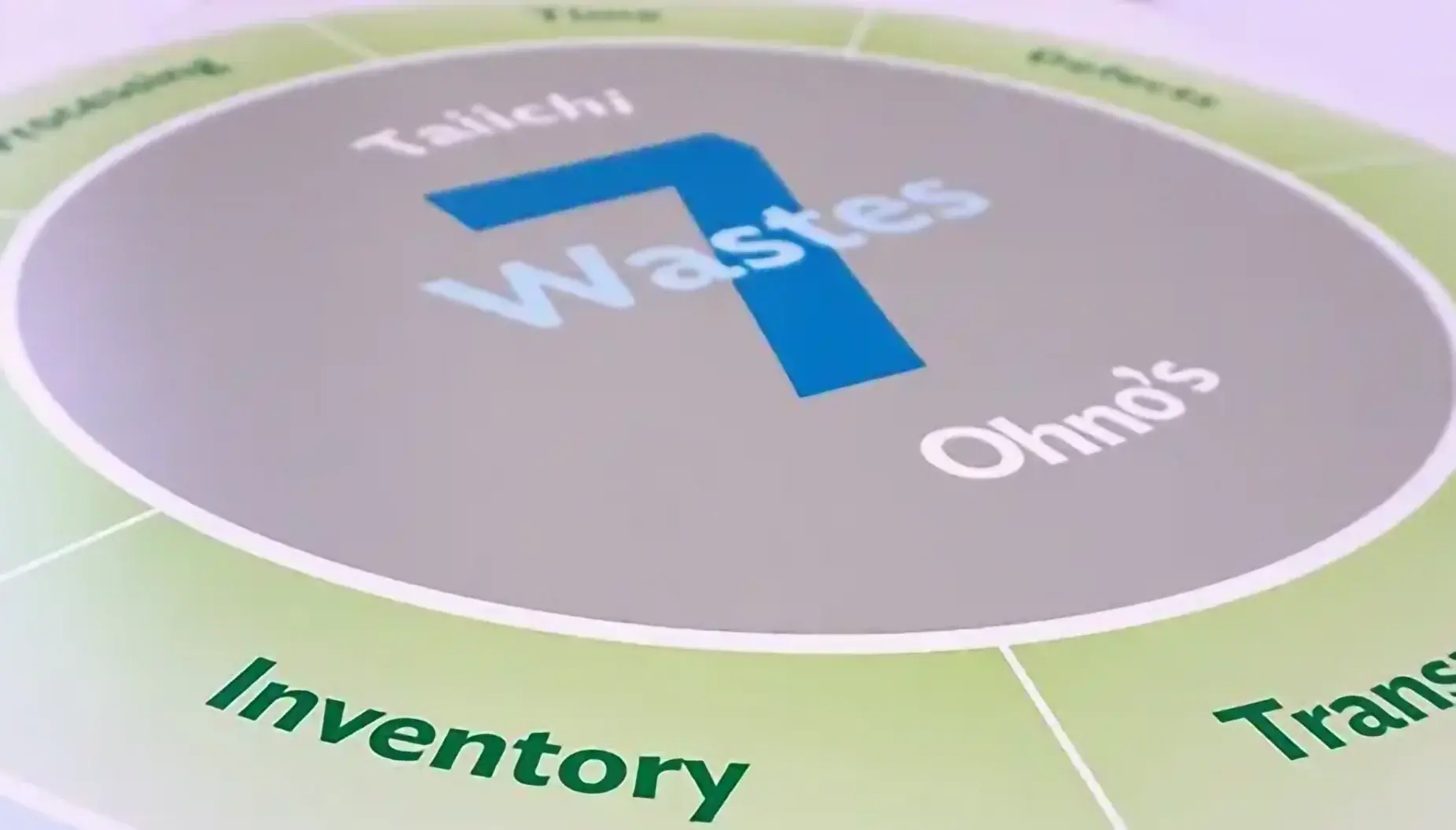
If you work for such an organization, what can you do to begin to turn this around? You can start by learning about the types of wastes that are endemic in healthcare. Here are the seven wastes identified by Taiichi Ohno, a founder of the Toyota Production System, and some examples of where they are found in healthcare organizations:
| Waste | Definition | Examples |
| Processing | – Unnecessary processes that an organization deems necessary – Doing more work than required to achieve the organization’s goal |
– Ordering unnecessary laboratory tests – Preparing two or more patient-information forms with the same information – Entering the same information in several systems |
| Time | – Waiting for people to arrive or services to be delivered – Idle time of people, equipment or processes |
– Creating a waiting list for appointments with a healthcare provider – Waiting for a service to be delivered (such as a meal or medication) – Waiting for a clinician to call back a patient or staff member |
| Defects | – Problems with materials and processes | – Missed allergy – Broken equipment – Healthcare-acquired conditions such as blood clots and infections |
| Motion | – Unnecessary movement that does not add value – Movement that is either too quick or too slow |
– Using more than one mouse click to access an EHR – Walking between patient rooms – Reaching to collect supplies |
| Transportation | – Conveying, transferring, picking up, setting down, piling up and otherwise moving unnecessary items | – Moving supplies throughout the hospital – Moving patients to different departments |
| Inventory | – Storing excessive supplies, materials, equipment or information for any length of time | – Filling a file cabinet with preprinted well-check forms – Ordering a backup supply of surgical tools – Storing expired or damaged products |
| Overproduction | – Producing something at the wrong time or in unnecessary amounts | – Producing too much food for the cafeteria – Preparing medication in batches – Staying in the hospital longer than medically necessary |
Discovering waste in your organization
The best way to learn about the seven wastes in your organization is to take a hike to the front lines of your department! As Toyota honorary chairman Fujio Cho said, “Go see, ask why, show respect.” As you observe, listen for key phrases (such as “just in case,” “it’s always been this way,” and “this one time”), ask your staff about the objective and purpose of what they’re working on, and most important, engage them in identifying elements of their work that are challenging or annoying. Do not try to solve the issues while observing; instead, focus on understanding the current state and beginning the necessary staff engagement for continuous improvement and sustaining change.
Initially, you may find a lot of waste hiding the necessary work and the elements that add value — which is the opposite of waste — to patient care. You may also feel uncomfortable referring to some processes as waste. Remember, waste refers to the part of the process that is not valuable; it is not a judgment on a person who’s participating in the process. Value is ultimately determined by the patient or customer. You and your staff can work together to capture what, if any, value is present in a process, task or item. When evaluating a process, challenge yourself and others to consider the patient’s perspective by asking these questions:
- Is the patient or customer willing to pay for it?
- Does it transform the patient, product or service?
- Is it done right the first time?
- Does it contribute to meeting the patient’s needs?
Working with others to see the waste in healthcare can inspire everyone to use the principles and tools of lean healthcare improvement, such as 5S (sort, simplify, sweep, standardize and self-discipline) and root-cause analysis.
“Once you start to see the waste that surrounds everything, you will also see the burden and limitations waste places on your employees and patients.”
– Megan McIntyre
The eighth waste
Once you start to see the waste that surrounds everything, you will also see the burden and limitations waste places on your employees and patients. Then you will understand why Toyota later identified an important eighth waste: the waste of human potential. After you and your staff use these processes to see waste, you can also use improvement processes to eliminate it. In a respectful workplace in which all employees are encouraged and expected to speak up, staff will generate ideas to improve processes, and then your teams will test and refine their ideas. The end result is a new process that’s better for patients and better for the staff who use it — because it involves less waste and more value for the patient.
A word of encouragement
If you’ve never identified waste in a process before, just try observing a process at home or at work while thinking about the seven wastes. Simply work to capture the current state. Then you can assess root causes and generate a few ideas about how to eliminate the waste you’ve seen. Once you understand the nuances of waste, you can begin to make a difference in improving quality outcomes, patient experience, employee engagement and economic success.
Get started with your team
Practice identifying and eliminating waste in a health care environment by downloading our complimentary waste walk exercise e-booklet.
Ready for training?
Our Advanced Process Improvement Training program teaches participants how to use foundational healthcare improvement methods – such as 5S and root-cause analysis – to drive improvements that save time, create value and eliminate waste.
Originally published June 8, 2016, updated January 19, 2023